Specifications
Specifications
strategy
It must feel as authoritative and precise as the work it enables, while remaining instantly legible on a cluttered desktop or crowded inbox.


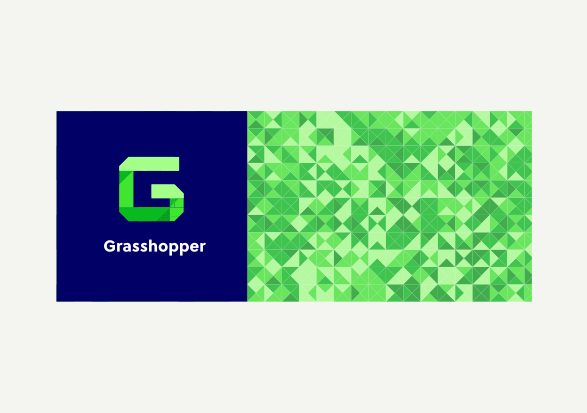
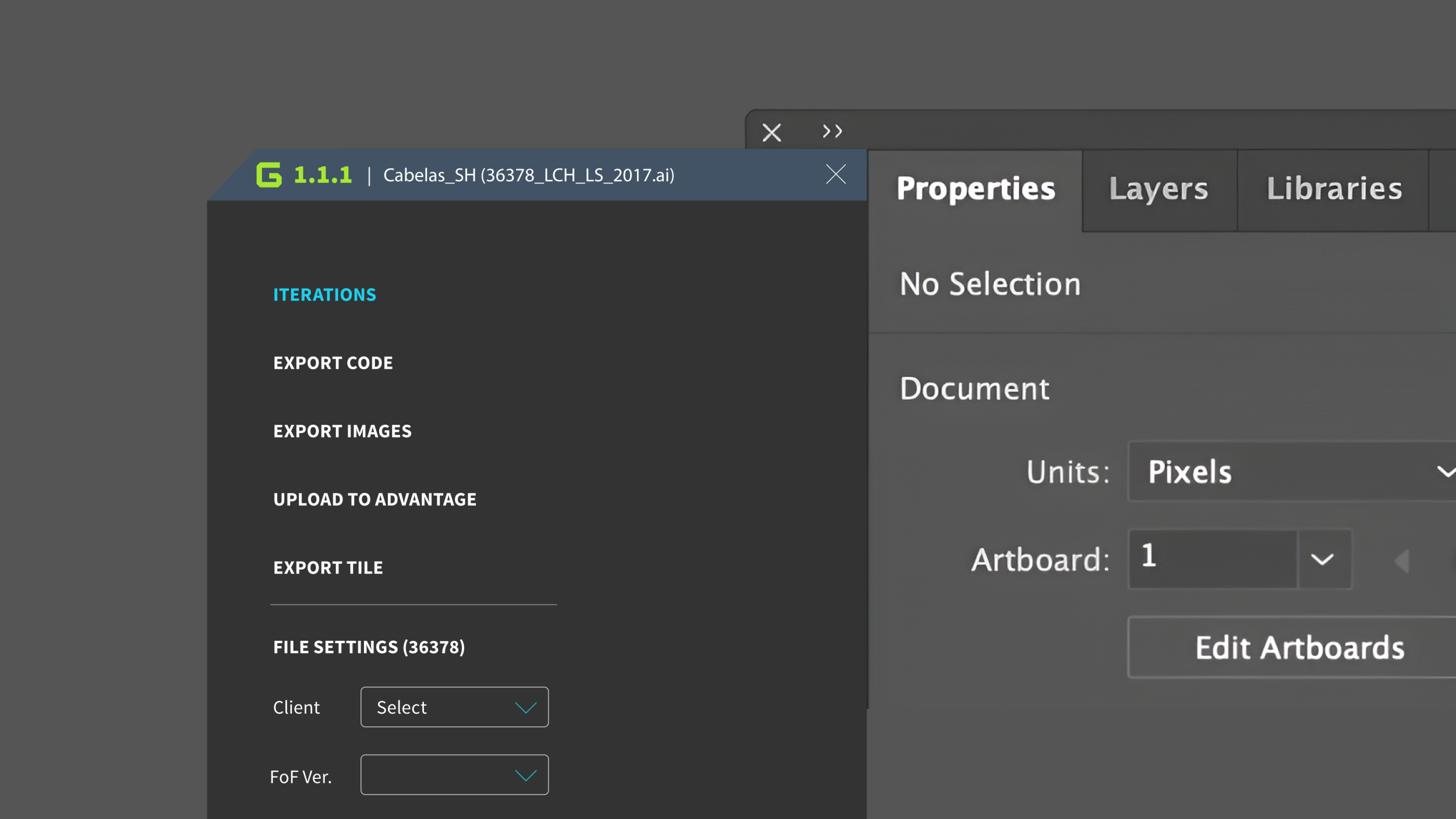
Grasshopper, Kepler, Fonts of Fury, and Clementine are four proprietary tools built to eliminate friction across the Conversant creative pipeline. Grasshopper extends Adobe Illustrator with brand-enforced design controls, standardizing file output and removing front-end developer dependency from campaign generation.
Kepler embeds into After Effects, connecting design, production, and ad server deployment for video assets in a single workflow. Fonts of Fury converts desktop-licensed typefaces into bitmap spritesheets, eliminating recurring web font costs. Inigo automates image cataloging, cropping, and production deployment through consolidated API-driven steps.
Each tool in the Creative Tools ecosystem is purpose-built, professionally named, and visually distinct. Like instruments in an orchestra, they are designed to work together while retaining individual identity, enabling any creative, developer, or ops professional to identify their tool at a glance.
Every touchpoint, from release email header to installer icon, signals institutional legitimacy. The brand resolves the fragmentation problem by making every communication feel like it came from a single, trusted source: Conversant Creative leadership.
Internal tools fail when they feel internal. When a Grasshopper update email looks indistinguishable from a personal Outlook message, urgency is lost. Design that demands recognition protects operational velocity.
Design process
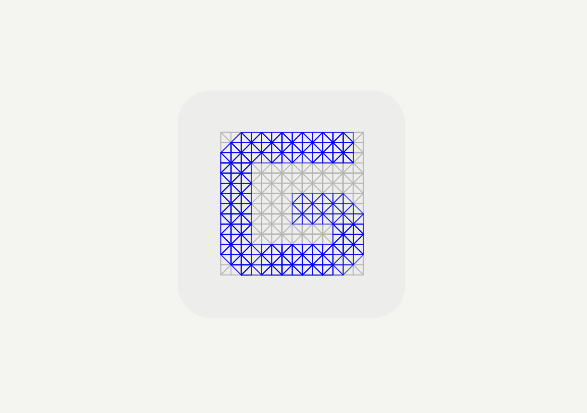
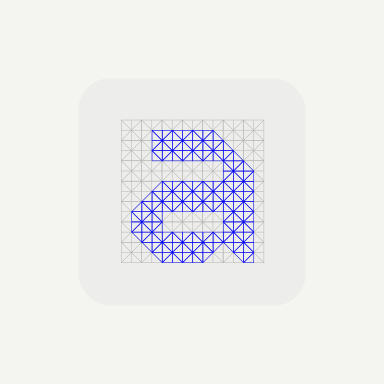
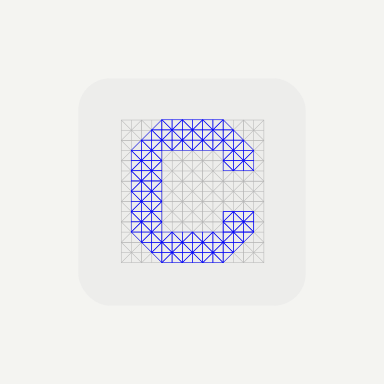
Each tool's name generates its grid geometry; its letterform generates its icon. The system scales without manual art direction. Every future tool automatically inherits the visual language.


Each tool's visual pattern is derived algorithmically from its name. Character count determines grid density. The initial letterform becomes the icon. Color is assigned sequentially. No two tools can share a visual identity, and future tools require minimal manual design intervention.
In use


To unify a fragmented internal email landscape, inconsistent branding, misaligned content, three different delivery tools, I designed a taxonomy-driven Communication Architecture that standardized templates across four categories (Initiatives, Operations, Product, Leadership), enabling any team to produce on-brand emails regardless of platform, with a flexible system built to scale.
A chromatic taxonomy
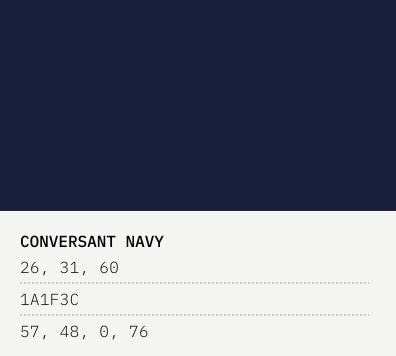
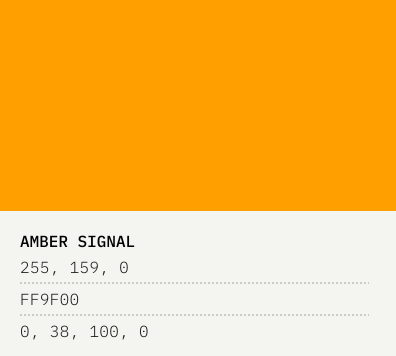
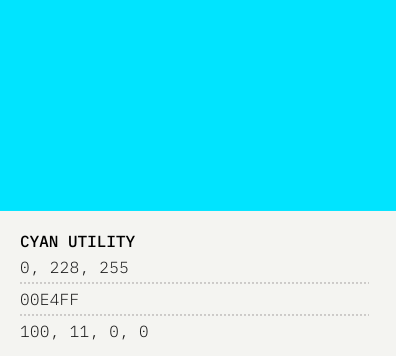
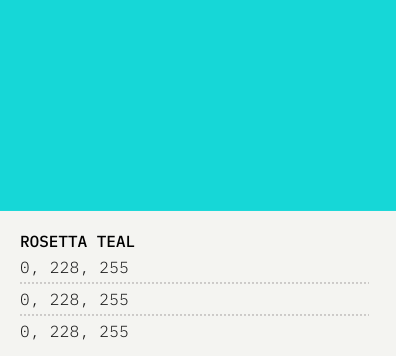
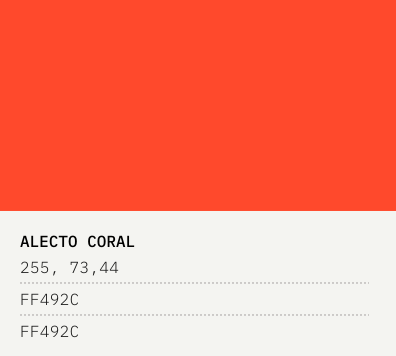
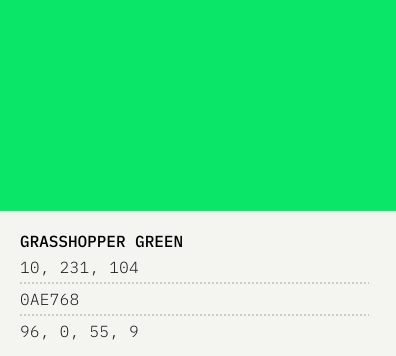
The color system serves two purposes: brand authority through the Navy/White/Amber foundation, and tool differentiation through the per-product accent palette. Each tool owns its color. Collision is by design.